A field sales rep's most valuable resource is time in front of customers. Every hour spent driving back and forth across a territory, or visiting an account that didn't need a visit, is an hour not spent selling.
Good route planning helps reps see more of the right customers each day. Check-ins and visit notes make sure what happens on each visit isn't lost. This guide covers both.
Plan routes on a map
Seeing customers on a map changes how reps plan their week. Instead of working from a list, they can:
- Group nearby customers into the same day
- Fit in smaller accounts that sit along the route to a big one
- Spot gaps: areas with prospects but no regular visits
A simple rule: plan routes so reps drive in a loop, not back and forth.
Decide who needs a visit
Not every customer needs the same attention. A visit plan might look like:
- Top accounts: every week or two
- Regular accounts: every month
- Small accounts: every quarter, with the customer portal handling reorders in between
- Prospects: based on how warm the lead is
Use sales history to decide. Top customers and buying trends are a better guide than habit.
Check in at every visit
A check-in records that the rep was at the customer, and when. It answers simple questions for managers (was this account visited this month?) without anyone filling in a report.
Write visit notes
Visit notes are where the real value is:
- What the buyer said about current products
- New products they're interested in
- Competitor activity
- Problems to fix (a late delivery, a pricing question)
- Next steps and when to follow up
Notes saved to the customer's record are there for the next visit, and for whoever covers the territory during vacation.
Turn notes into follow-up tasks
"Send samples next week" only happens if it's a task with a date. Follow-up tasks tied to the customer keep promises from slipping.
Take the order during the visit
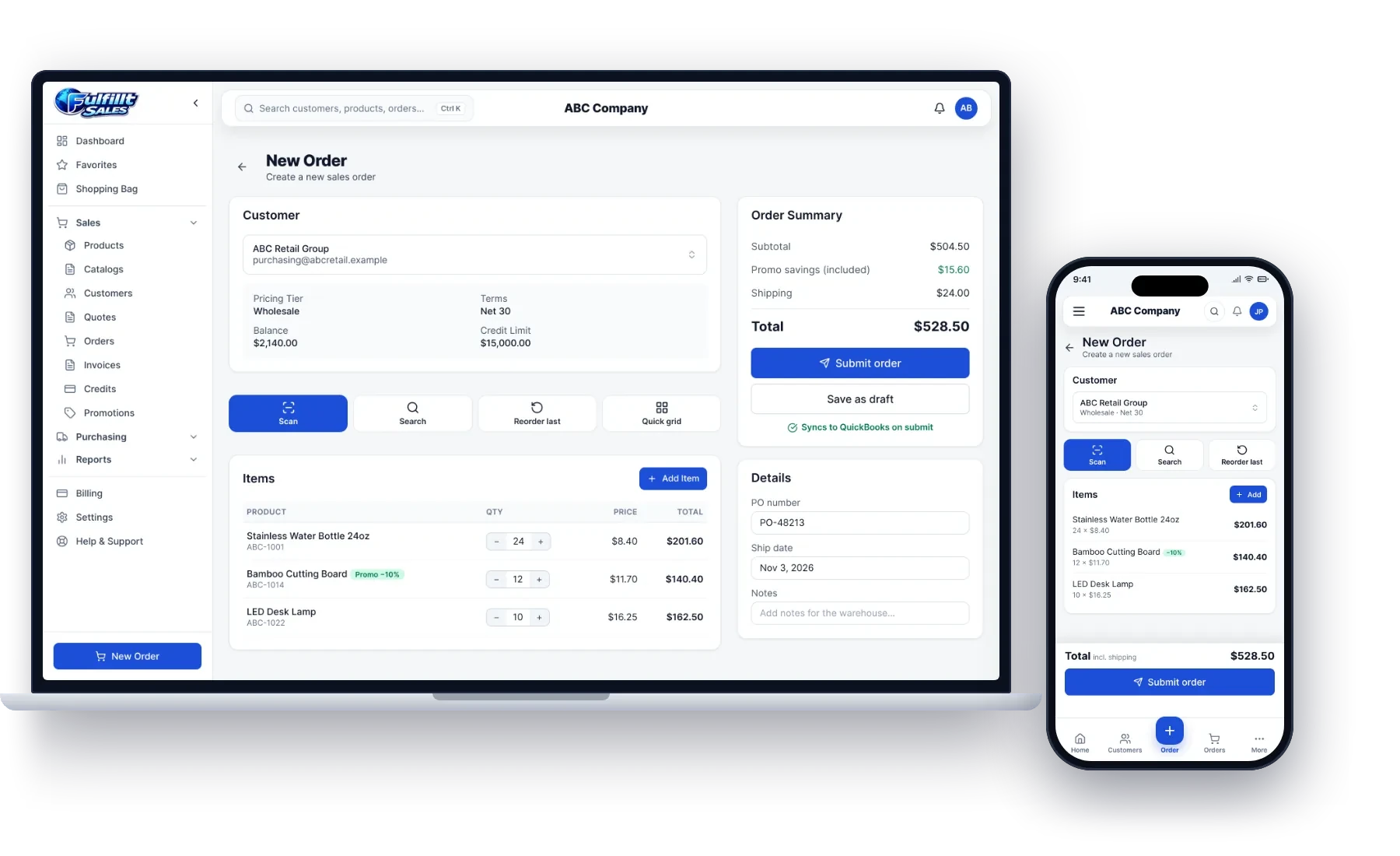
The best visit ends with an order. With the customer's history and prices on the rep's phone, reorders take minutes, even with no signal. See offline order taking.
An example
A rep at the fictional distributor ABC Company plans Thursday on the map: five customers in a loop around one town, including a top account and two smaller stores on the way. At each stop they check in, write the order, and add notes. At one store, the buyer asks about a new product line, so the rep adds a follow-up task to send samples. By the end of the day, the manager can see all five visits, three orders and one open task, with no report to write.
How Fulfillt Sales helps field reps
Fulfillt Sales includes:
- Route and visit planning with a map, check-ins and visit notes
- Customer notes, follow-up tasks and full order history
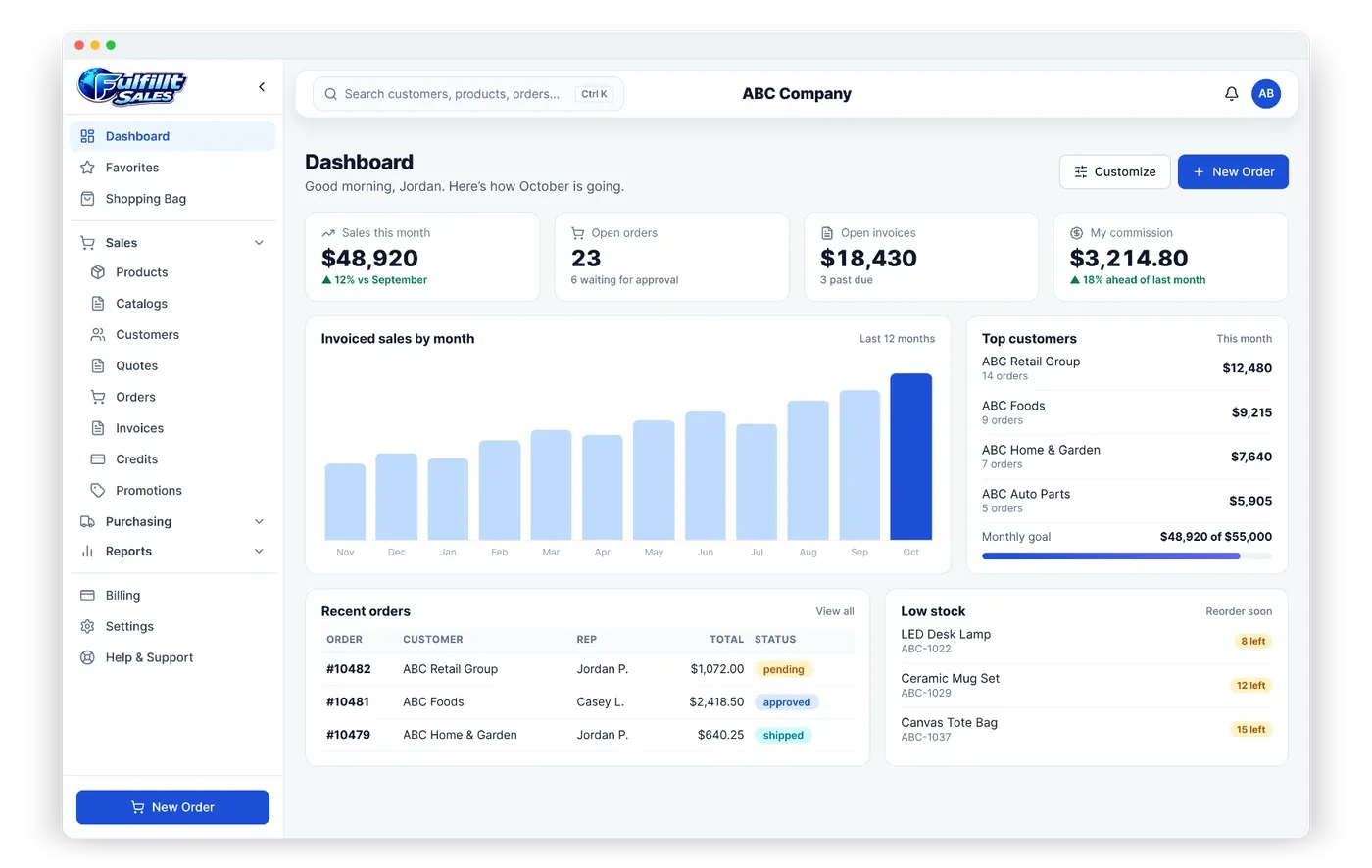
- Top customers, trends and buying patterns to decide who to visit
- Offline ordering at each stop
- Each rep sees only their own customers
The bottom line
Plan routes on a map, visit customers based on what they're worth, check in, write notes and turn them into tasks. Reps see more customers, and nothing said on a visit gets lost.