Many 3PLs didn't start as 3PLs. They started as distributors, manufacturers or e-commerce brands with a warehouse, a trained team and some empty racks. A neighbor asked if they could store a few pallets. Then a second company asked. Before long, third-party logistics was a real part of the business.
If you have spare space and a team that already knows how to receive, pick and ship, offering 3PL services can turn fixed costs into revenue. This guide walks through what changes when you start storing and shipping for other companies.
Is it a good fit?
Starting a 3PL from your own warehouse works best when:
- You have steady spare capacity, not just a seasonal dip
- Your team already handles receiving, picking and shipping well
- You can serve clients with similar products to yours (similar handling, similar storage)
- You're willing to be held to someone else's service standards
It's less of a fit if your own volume swings wildly, or if new clients would need very different handling (frozen, hazmat, oversized).
What changes when you become a 3PL
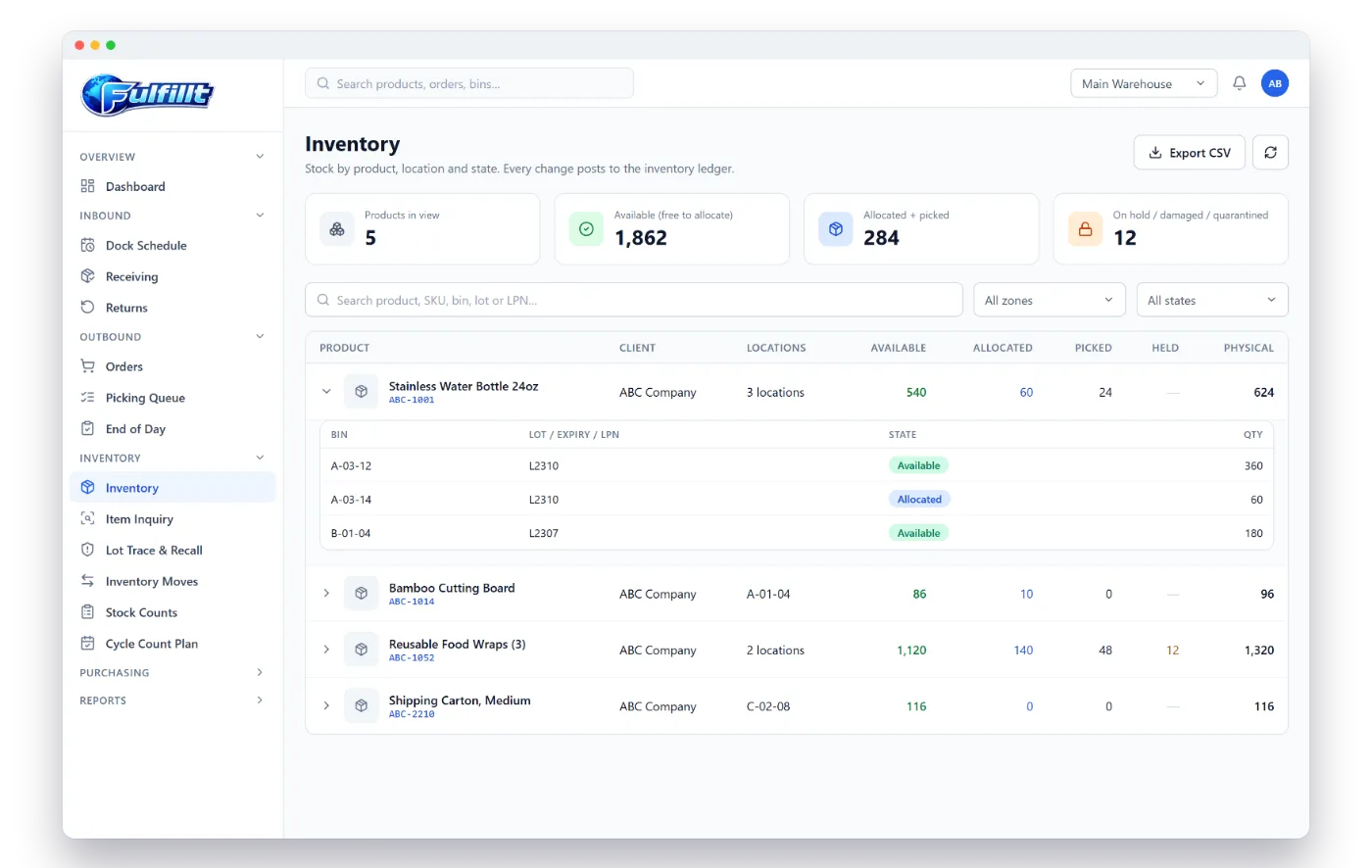
Inventory has to be separated by owner
Your system now needs to know whose product is in every bin. Even if two clients sell similar items, their stock, orders and reports must stay separate.
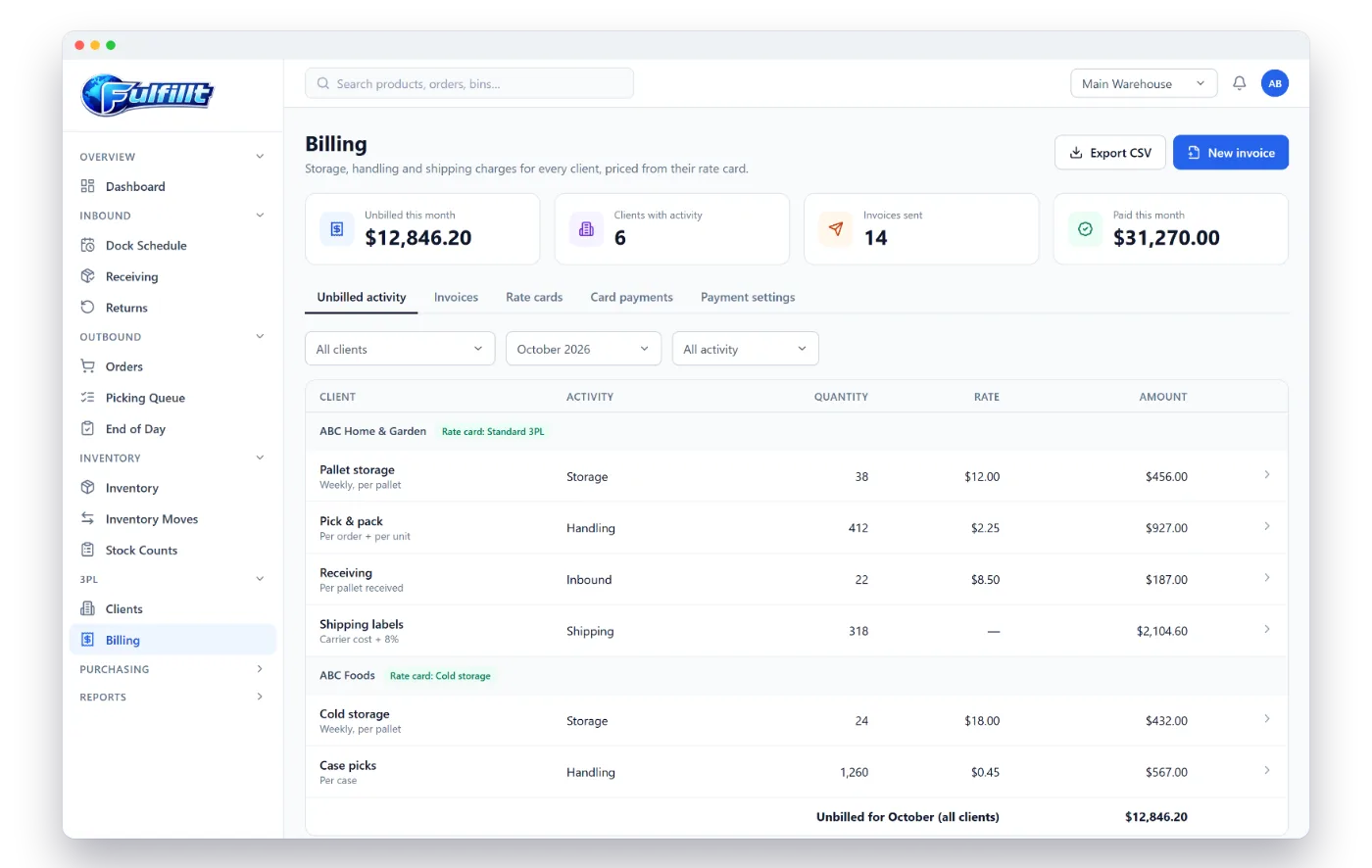
Billing becomes a core process
You'll bill for receiving, storage, pick and pack, materials and special projects. Storage especially needs to be tracked daily. See 3PL billing made simple and how to write a 3PL rate card.
Clients expect visibility
Clients will want to see their stock and orders without calling you. A client portal handles that.
Accuracy is now someone else's customer experience
A mis-pick in your own business is an internal problem. A mis-pick for a client is their customer's bad experience, and it reflects on you. Scanning every pick and regular cycle counts become essential.
Step by step
- Measure your real capacity. Pallet positions, shelf locations and labor hours you can commit, after your own peak season.
- Define what you'll offer. Storage only? Pick and pack? Parcel, LTL or both? Returns? Kitting?
- Build a rate card. Start simple and price for your real costs. See our rate card guide.
- Write a service agreement. Cover liability, insurance, minimums, payment terms, notice periods and what happens to inventory if the agreement ends.
- Set up your system for multiple owners. Separate client inventory, client users and client billing.
- Start with one client. Learn on a small account before taking on more.
Don't run two systems
A common mistake is running your own warehouse in one system and your clients in spreadsheets. It doubles the work and makes errors likely. Use one warehouse system that can handle your own stock and client stock side by side.
What it costs to get started
Starting a 3PL from a warehouse you already run is much cheaper than building one from scratch, but there are still real costs:
- Software. You need a WMS that separates inventory by client and handles billing. Spreadsheets work for one client and break at three.
- Insurance. Your policy covers your own goods. Storing other companies' goods usually needs warehouse legal liability coverage. Talk to your broker before you sign a client.
- Contracts. A warehouse services agreement covers rates, liability limits, payment terms and what happens when the relationship ends. Have a lawyer review your template once.
- Labor. Client work needs to be scheduled alongside your own shipping. Plan for busy seasons, which often overlap.
- Space. Mark off client areas, or at least client locations in your system, so stock is never mixed up.
Mistakes new 3PLs make
- Pricing too low to win the first client. It's hard to raise rates later. Price for your real costs and a fair margin.
- No minimum. Small clients take setup and support time even when volume is low.
- Handshake agreements. Put rates, liability and payment terms in writing before the first pallet arrives.
- Saying yes to every product. Hazardous goods, food, very large items and high-value goods each bring rules and risks. Start with products like the ones you already handle.
- Treating the client like a side project. Their orders need the same care as yours. One bad peak season can end the relationship.
Frequently asked questions
Do I need a license to become a 3PL?
In the US there's usually no special license for basic warehousing and fulfillment, but you need the normal business licenses for your location, and some products (food, alcohol, pharmaceuticals, hazardous materials) have their own rules. Check with your state and local authorities.
How much space do I need to start?
Less than you might think. Many warehouses start with a few dozen spare pallet positions and one client. What matters more is that the space is available all year, not just in your slow season.
How do I find my first 3PL client?
Start with companies you already know: suppliers, customers, or businesses in your industry that ship from a garage or a crowded office. Local business groups and online 3PL marketplaces are other good sources.
Can I run my own business and client fulfillment in one system?
Yes, and you should. A WMS built for 3PLs treats your own company as one more client account, so all stock, orders and billing live in one place.
How Fulfillt WMS helps you start
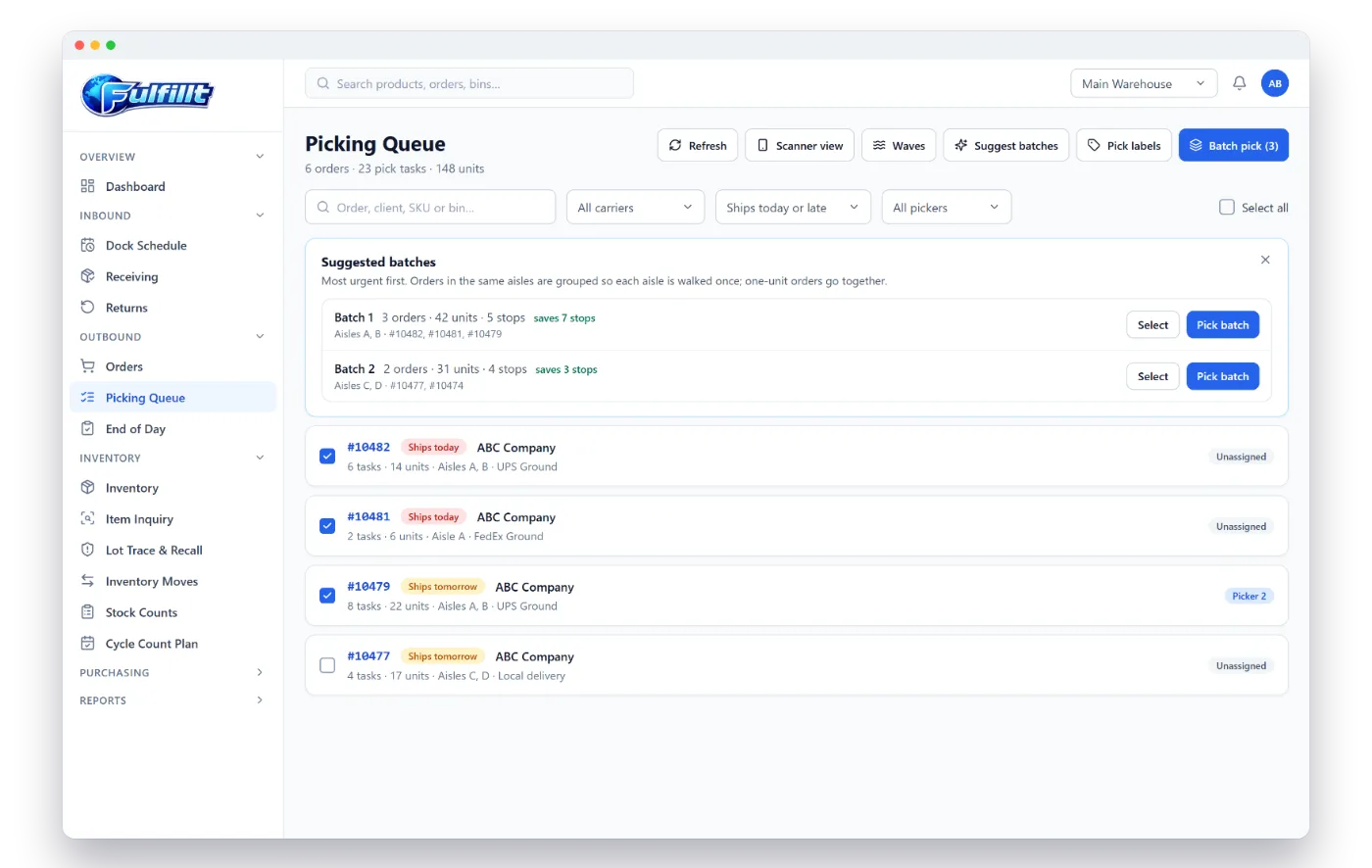
Fulfillt WMS can run in standalone mode for your own warehouse, and you can switch to 3PL mode any time, keeping everything you've already set up:
- Multiple clients in one warehouse, each with its own stock, orders and users
- Rate cards, daily storage snapshots and handling charges turned into invoices
- A client portal for inventory, orders, inbound shipments, invoices, reports and dock requests
- FIFO, FEFO or LIFO rotation per product or client
The bottom line
If you have steady spare space and a team that ships well, becoming a 3PL can turn empty racks into revenue. Separate inventory by owner, take billing seriously, give clients visibility, and start with one client.