In B2B sales, the quote is often where deals are won or lost. A buyer asks three suppliers for prices. The one who answers first, with an accurate, professional quote, has a real advantage. The one who takes three days, or sends a quote with the wrong prices, usually doesn't get a second chance.
Then, when the buyer says yes, many teams retype the quote as an order, sometimes in a different system. That's slow, and it's where mistakes happen. This guide covers how to make the whole path from quote to order fast and accurate.
Send quotes fast
Quote from anywhere
Reps should be able to build a quote on their phone or tablet at the customer, not wait until they're back at a desk.
Use the customer's real prices
A quote must use the same pricing rules as an order: the customer's tier, any contract prices, quantity breaks and active promotions. See customer-specific pricing.
Email it right away
Send a copy of the quote to the buyer by email directly from the app, while you're still talking.
Make quotes easy to accept
- Keep the quote clear: products, quantities, prices, terms and total
- Show any promotion savings
- Include a quote number the buyer can reference
- State how long the prices are valid
Follow up
Most quotes don't get an immediate answer. Set a follow-up task for each open quote, for example two or three days later, and check in. A simple "Any questions on the quote?" call wins more deals than people expect.
Turn a quote into an order in one click
When the buyer accepts, the quote should become an order without retyping. Everything carries over: customer, products, quantities and prices. The order then flows to your accounting system and the warehouse like any other.
Keep documents in sync with accounting
Quotes, orders, invoices and credits should all live in the same system as your accounting, with automatic document numbering that matches it. That way, the buyer's quote number, your order and the final invoice all line up.
Measure your quoting
- Time to quote: how long from request to quote sent
- Win rate: how many quotes become orders
- Quote value vs. order value: whether buyers trim quotes before ordering
Faster quotes and steady follow-up usually move all three in the right direction.
An example
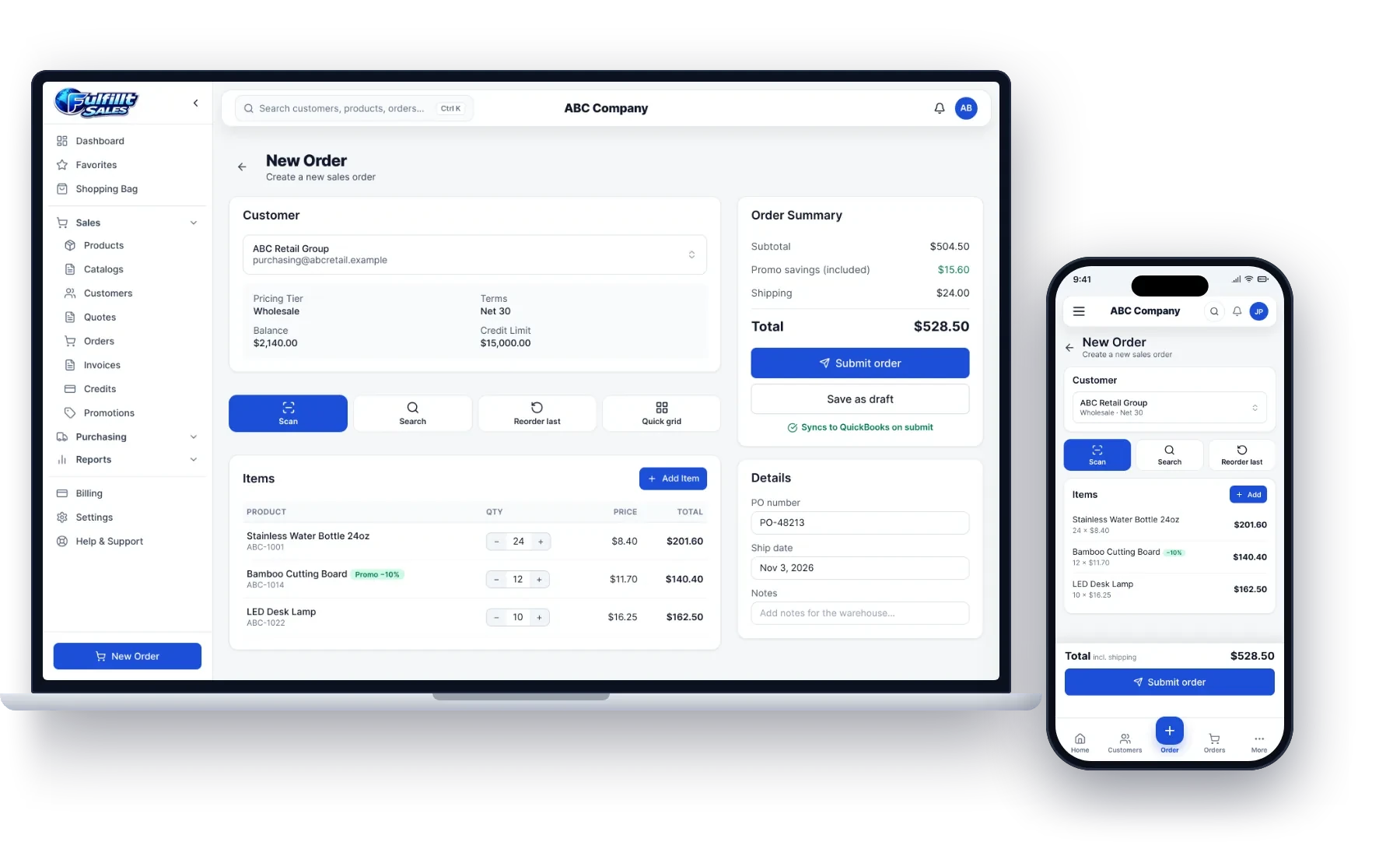
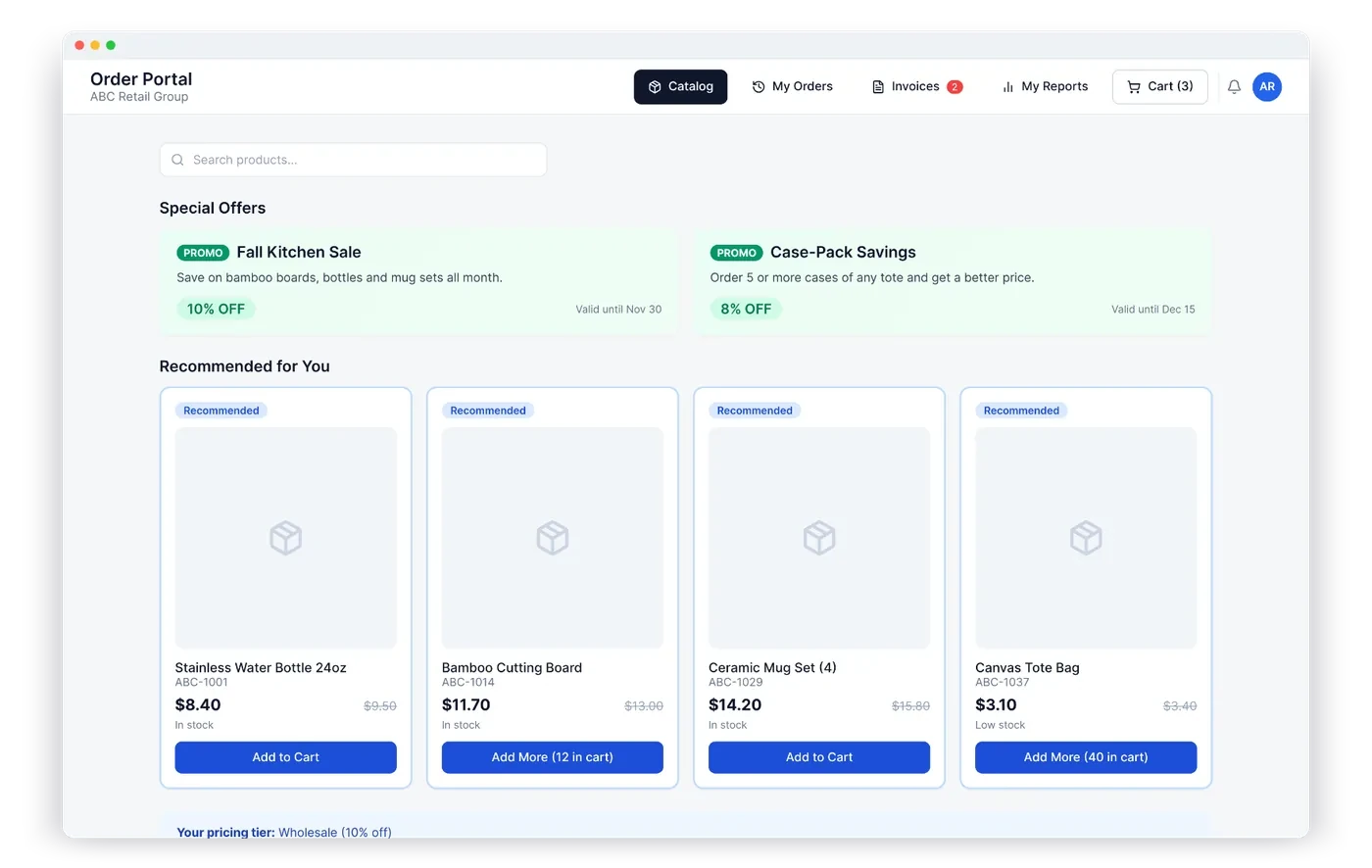
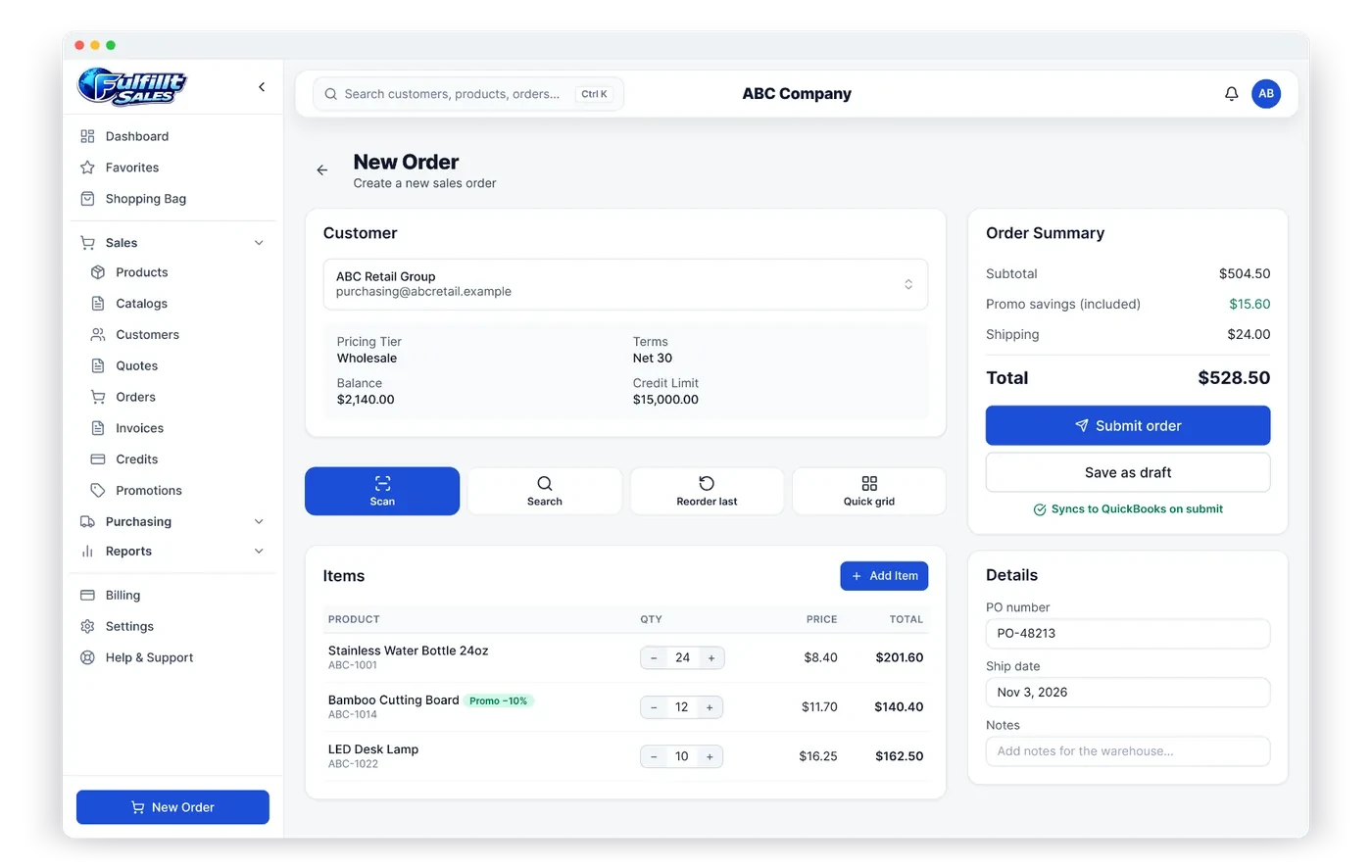
A buyer at ABC Home & Garden asks a rep from the fictional distributor ABC Company for prices on a new product line. Standing in the store, the rep builds a quote with the customer's wholesale prices and this month's promotion, and emails it before leaving. Two days later, a follow-up task reminds the rep to call. The buyer says yes, and the rep turns the quote into an order with one tap. It goes to QuickBooks and the warehouse right away.
Mistakes that lose quotes
- Slow answers. In B2B, the first good quote often wins. A quote sent the next day can lose to one sent the same hour.
- Wrong prices. A quote at list price when the customer has a contract price looks careless, and one below cost loses money.
- No expiry date. Quotes without an end date get accepted months later at old prices.
- Nobody follows up. Many quotes are lost simply because no one asked.
- Retyping the order. Copying an accepted quote into a new order invites mistakes in quantities and prices.
A simple quote follow-up routine
- Same day: send the quote, with a short note and a clear expiry date.
- Two to three days later: check it arrived and ask if anything needs to change.
- One week later: offer a call, or a small change that might help (delivery date, quantity break).
- Before it expires: let the customer know the quote ends soon.
- After it expires: mark it won or lost, and note the reason.
Recording why quotes are lost (price, timing, stock, chose a competitor) shows where to improve.
Frequently asked questions
What is the difference between a quote and a sales order?
A quote is an offer: products, prices and terms the customer can accept. A sales order is the confirmed order once they accept, which the warehouse then picks and ships.
How long should a B2B quote be valid?
Many businesses use 15 to 30 days. Shorter is safer when costs change often; longer may be needed for large projects that take time to approve.
What is a good quote win rate?
It varies by industry and how quotes are used. Track your own rate over time, and compare it by rep, product line and customer type to see where you win and lose.
Should quotes go into accounting?
Many accounting systems support estimates. Keeping quotes connected means an accepted quote can become an order and an invoice without retyping.
How Fulfillt Sales handles quotes
Fulfillt Sales handles the full path from quote to invoice:
- Quotes, orders, invoices and credits
- Turn a quote into an order in one click
- Email copies of orders and quotes to customers
- Automatic document numbering that matches your accounting system
- Invoices and credits with payment terms and tax codes
- Syncs with QuickBooks Online, QuickBooks Desktop, Xero or Odoo
The bottom line
Answer quote requests fast, with the customer's real prices, follow up, and convert accepted quotes into orders without retyping. It's one of the simplest ways to win more B2B deals.