Landing a large retail account is a big win for a supplier, and for the 3PL that ships for them. Then the retailer's routing guide arrives: dozens of pages of rules about labels, pallets, paperwork and delivery windows. Break a rule and the retailer deducts a chargeback from the invoice.
Chargebacks are often a small percentage of each shipment, but they add up quickly and come straight out of margin. This guide explains the most common compliance requirements and how to meet them consistently.
What is a chargeback?
A chargeback (or compliance fine) is a deduction a retailer takes from a supplier's payment when a shipment doesn't follow its rules. Common reasons include:
- Missing or unreadable carton or pallet labels
- Labels in the wrong place
- Wrong or missing advance ship notices
- Incorrect quantities or mixed products where not allowed
- Late or early delivery
- Missing paperwork, such as the bill of lading
SSCC and GS1-128 labels
What is an SSCC?
An SSCC (Serial Shipping Container Code) is an 18-digit number that uniquely identifies one shipping unit: a carton or a pallet. No two shipping units anywhere should ever share an SSCC.
What is a GS1-128 label?
A GS1-128 label is the standard label that carries the SSCC as a barcode, along with readable text such as ship-from and ship-to addresses, PO number and carrier. Retailers scan it at their dock to receive the shipment automatically against the advance ship notice.
Where does it go?
Each retailer's routing guide specifies placement, but most require labels on two adjacent sides of a pallet, and a specific position on cartons. Follow the guide exactly.
The bill of lading (BOL)
For LTL and truckload shipments, the straight bill of lading is the shipping contract between the shipper and the carrier. It lists the shipper, consignee, carrier, number of pallets and cartons, weight and freight class. Missing or incorrect BOLs are a frequent cause of chargebacks and delays.
How to stay compliant
- Read every routing guide and keep a short checklist per retailer.
- Generate labels from the system, never by hand. Each SSCC must be unique.
- Print labels at packing, when the carton or pallet contents are confirmed.
- Scan cartons onto pallets, so the system knows exactly what's in each shipping unit.
- Print the BOL from the same data, so counts match the labels.
- Close out each day, confirming every shipment has tracking and paperwork.
- Track chargebacks by reason, and fix the root cause.
Why 3PLs need to get this right
When a 3PL ships for a brand, the brand pays the chargeback, but the 3PL gets the blame. Retail compliance is one of the main reasons brands choose (or leave) a 3PL. Being able to say "we print GS1-128 labels and BOLs from the system for every retail order" is a real selling point.
How Fulfillt WMS handles retail compliance
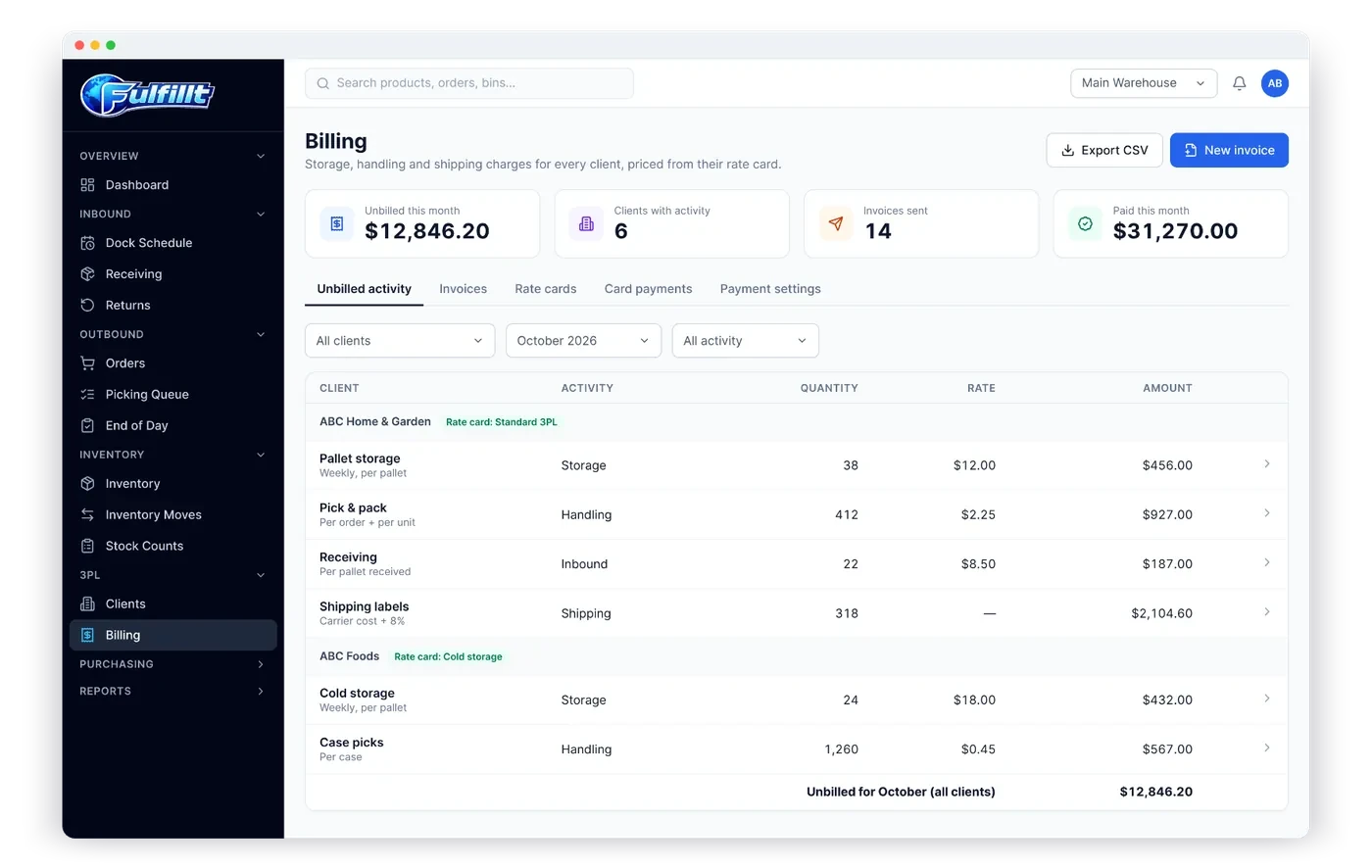
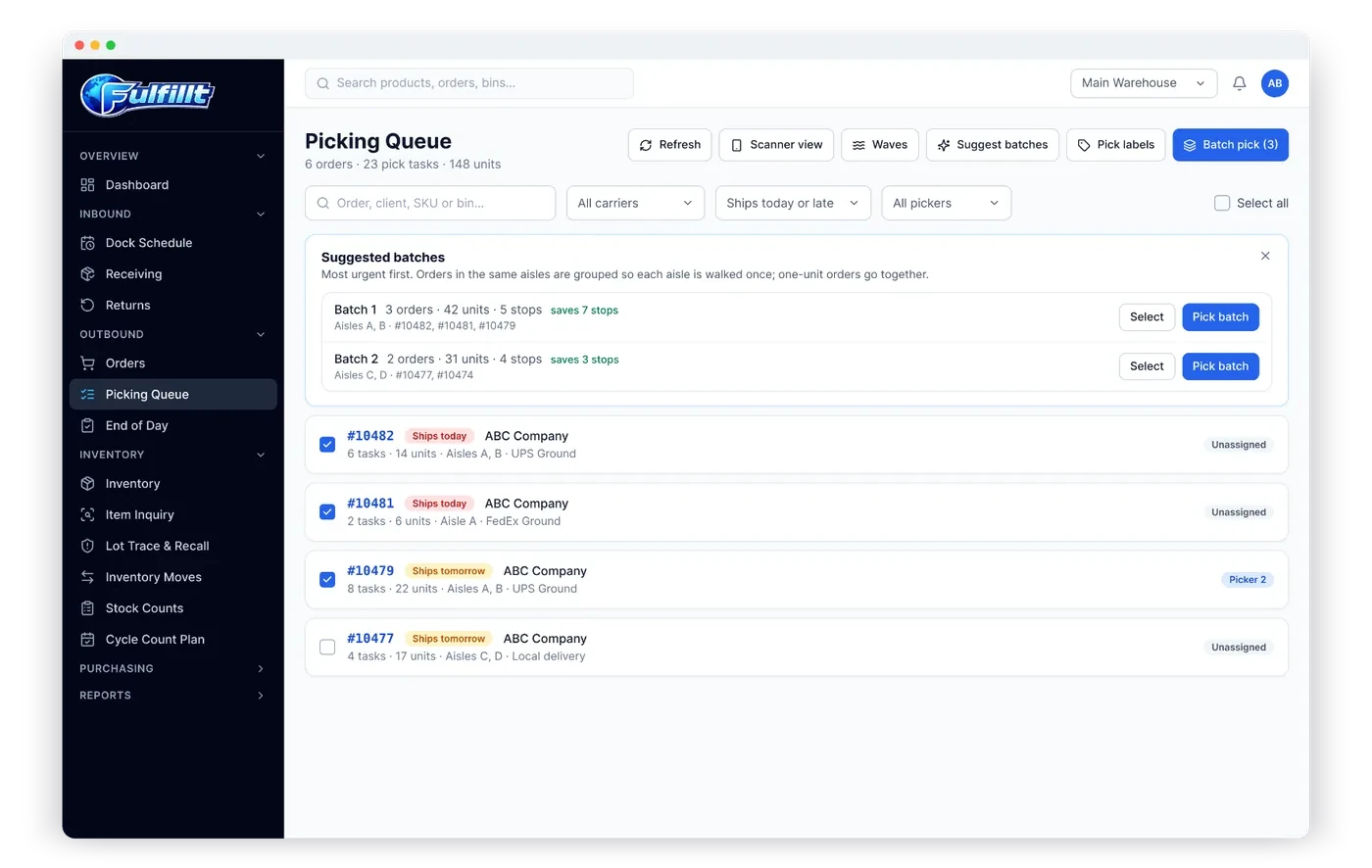
Fulfillt WMS includes shipping and retail compliance tools:
- GS1-128 SSCC carton and pallet labels for retail and wholesale orders
- Straight bills of lading (BOL) for LTL shipments
- Carrier labels through EasyPost, Shippo or ShipStation
- End-of-day close-out and tracking on every order
- Location, LPN, pick and compliance labels with Code 128, QR and Data Matrix barcodes
The bottom line
Chargebacks come from small mistakes repeated across many shipments. Generate SSCC labels and BOLs from your system, print them at packing, scan cartons to pallets, and close out every day.